
Sunny Star Croton
Codiaeum variegatum 'Sunny Star'
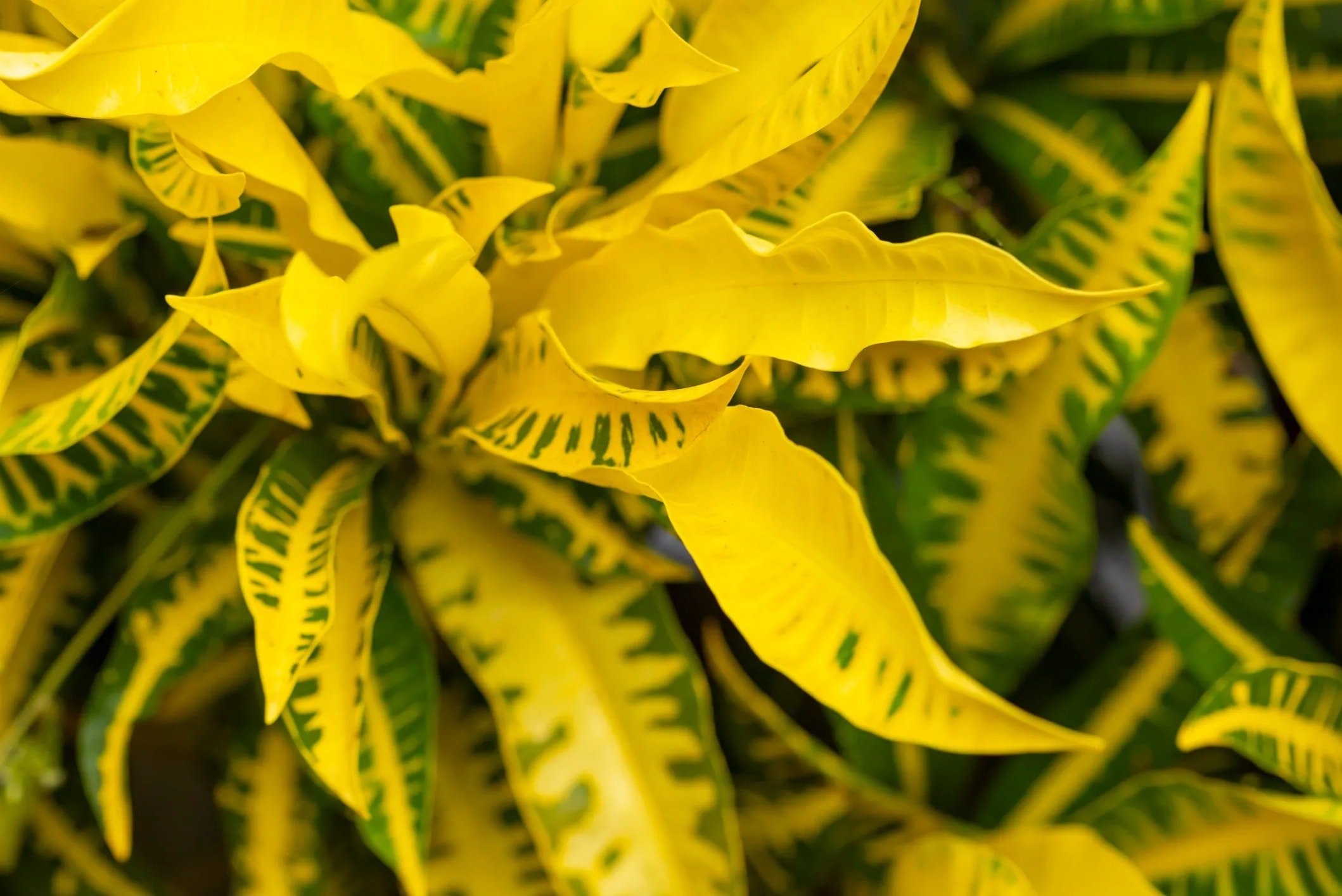
Narrow, lance-shaped leaves splashed in bright yellow and green — a bold, sun-loving croton that brings tropical color to any bright spot.
Overview
Sunny Star Croton is a striking cultivar of Codiaeum variegatum with long, narrow, lance-shaped leaves splashed and streaked in vivid yellow and green. Unlike the broad-leaved 'Mammy' croton, 'Sunny Star' has a more upright, architectural form with slender foliage that catches light beautifully. Like all crotons, it's a sun-lover that needs bright light to maintain its vivid coloration — in lower light, the yellow fades and the plant becomes leggy. It's dramatic, bold, and rewarding when given the right conditions.
Care Requirements
Light
Bright Light — needs the most light of any common houseplant; some direct sun is beneficial
Water
Every 1–2 weeks — keep soil lightly moist; more drought-tolerant than it looks
Humidity
Moderate to High (50–70%) — higher humidity prevents leaf drop and keeps foliage lush
Soil
Well-draining potting mix — standard potting soil with added perlite
Temperature
60–85°F (15–29°C) — protect from temperatures below 55°F; cold causes leaf drop
Fertilizer
Balanced liquid fertilizer every 4 weeks during spring and summer; stop fertilizing in fall and winter
Detailed Care Guide
Light
- Needs bright light — a south or west-facing window is ideal
- Some direct sun (2–4 hours of morning or filtered sun) intensifies the yellow coloration
- Low light causes the yellow to fade to green and the plant to become leggy
- Outdoors in a bright, sheltered spot during summer produces the most vivid coloration
Watering
- Water every 1–2 weeks — allow the top inch of soil to dry between waterings
- More drought-tolerant than many tropical plants once established
- Overwatering causes root rot — always check soil moisture before watering
- Reduce watering in winter
Soil
- Use a well-draining potting mix — standard potting soil with 20–30% perlite
- Good drainage prevents root rot
- Repot every 2 years in spring
- Slightly acidic pH (6.0–6.5) is ideal
Temperature & Humidity
- Prefers 60–85°F (15–29°C) — sensitive to cold and temperature swings
- Cold temperatures below 55°F cause significant leaf drop
- Higher humidity (50–70%) prevents leaf drop and keeps the foliage lush
- Keep away from cold drafts, air conditioning vents, and cold windowsills in winter
Difficulty Level
Intermediate — Sunny Star Croton is rewarding but demands bright light and consistent conditions. The biggest challenge is leaf drop, which is triggered by cold drafts, low light, overwatering, or moving the plant. Find it a bright, stable spot and leave it there — crotons hate being moved.
Extra Notes
Toxic to cats, dogs, and humans — the milky sap causes skin irritation on contact and vomiting if ingested. Wear gloves when pruning or propagating. Keep out of reach of pets and children. Crotons are notorious for dropping leaves when moved — find the brightest, most stable spot in your home and commit to it. Once settled, they're dramatic, long-lived plants.
Pro Tip
The golden rule with Sunny Star Croton: find its spot and don't move it. Crotons drop leaves in protest every time they're relocated, even to a better spot. Choose the brightest window in your home, place it there, and let it settle in for 4–6 weeks. Once it stops sulking, it will reward you with vivid, fast new growth.
New to this plant?
Just Received This Plant?
If you just received a cutting or node: wear gloves — the sap is a skin irritant. Place in water or moist propagation mix in bright indirect light at 70°F+. Roots form in 4–6 weeks. Dip the cut end in rooting hormone for better success. Once rooted, pot into a well-draining mix and place in the brightest spot available.
If you just received a potted plant: expect some leaf drop — this is normal shipping stress for crotons. Place immediately in the brightest spot in your home and do not move it again. Do not water unless the soil is completely dry. Do not fertilize for 6–8 weeks. Be patient — once it settles in (usually 3–4 weeks), new growth will emerge and the leaf drop will stop.
Basic Care Instructions
Place in the brightest spot available — a south or west-facing window with some direct sun is ideal. Water every 1–2 weeks allowing the top inch to dry. Maintain 50–70% humidity. Use a well-draining potting mix. Fertilize every 4 weeks in spring and summer. Do not move once settled.
Propagation
Stem tip cuttings root in water or moist propagation mix in 4–6 weeks. Wear gloves — the milky sap is a skin irritant. Keep warm (70°F+) and in bright indirect light while rooting. Dip the cut end in rooting hormone to improve success rates.
Common Problems & Fixes
Massive leaf drop after moving or repotting
Normal stress response — keep in a bright, warm, stable spot and do not move it again; new leaves will emerge in 2–4 weeks
Yellow fading to green — losing color
Needs more light — move to a brighter spot with direct or very bright indirect light to restore the vivid yellow coloration
Spider mites — fine webbing on leaves
Common in dry conditions — increase humidity, wipe leaves with a damp cloth, and treat with neem oil or insecticidal soap
Want to Add This to Your Collection?
Shop Sunny Star Croton and more live on Whatnot — new drops every week.